
How forecasting works, from on sale to the morning after
A forecast is only useful if you can act on it. Floorful's is built from your own nights, so it understands your venue, and it puts the next step beside the number.
It learns from your own nights
Each upcoming night is compared with your earlier nights like it: the nights of the same series if it has one, otherwise the same weekday. It needs at least three past nights to work from, and says how many it has until then. Nothing to configure: your sales and door scans are the data.
A new venue sees the forecast fill in after its first few weekends, and it gets sharper with every night you run.
It compares like with like
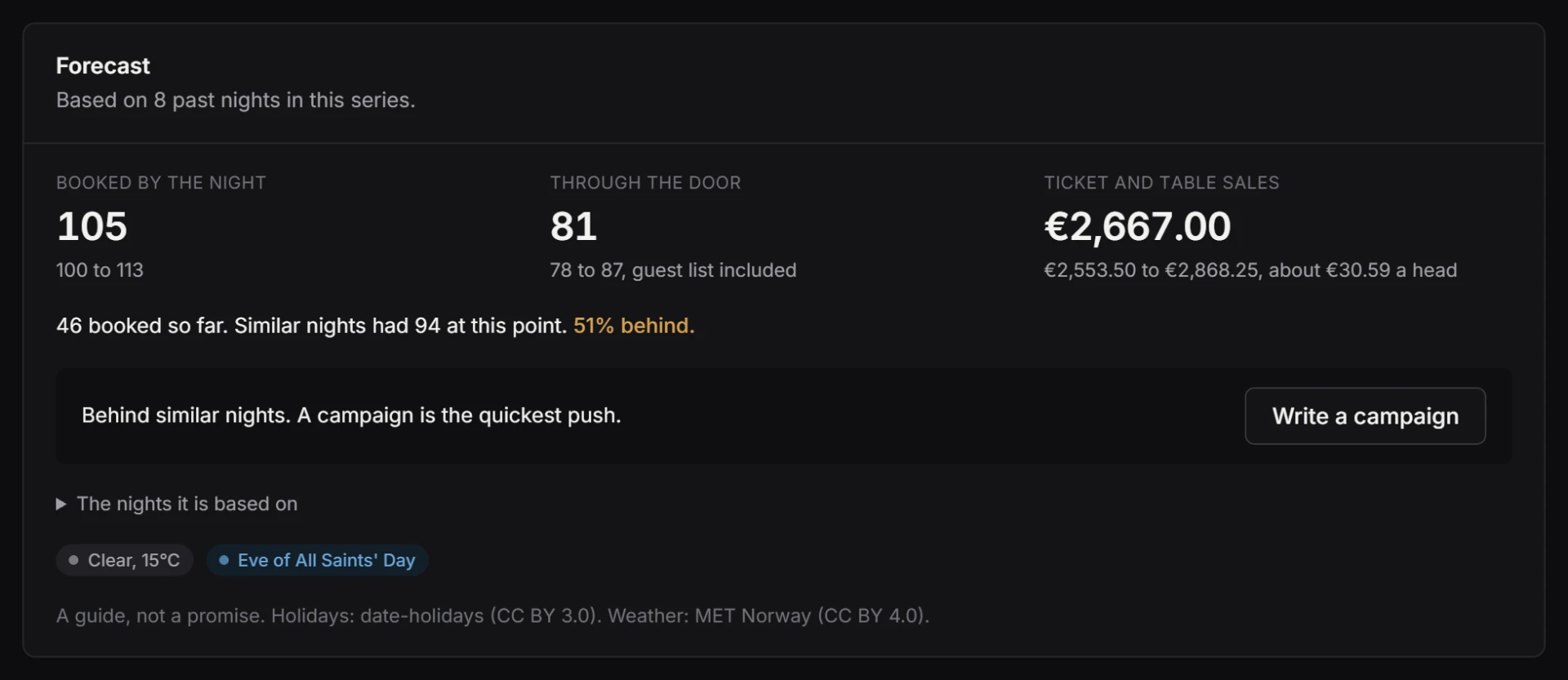
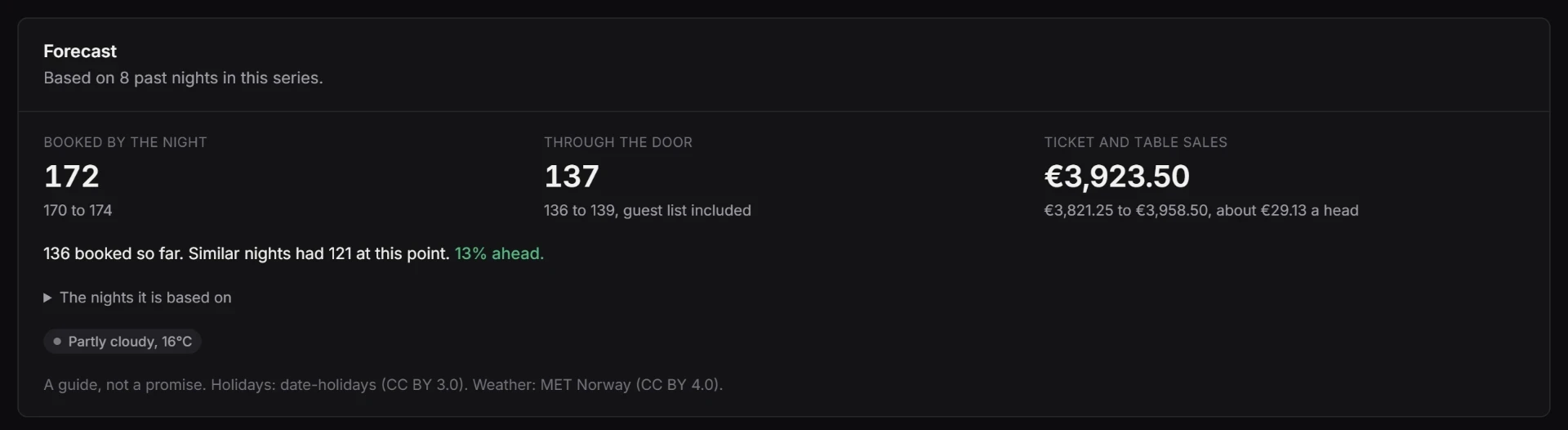
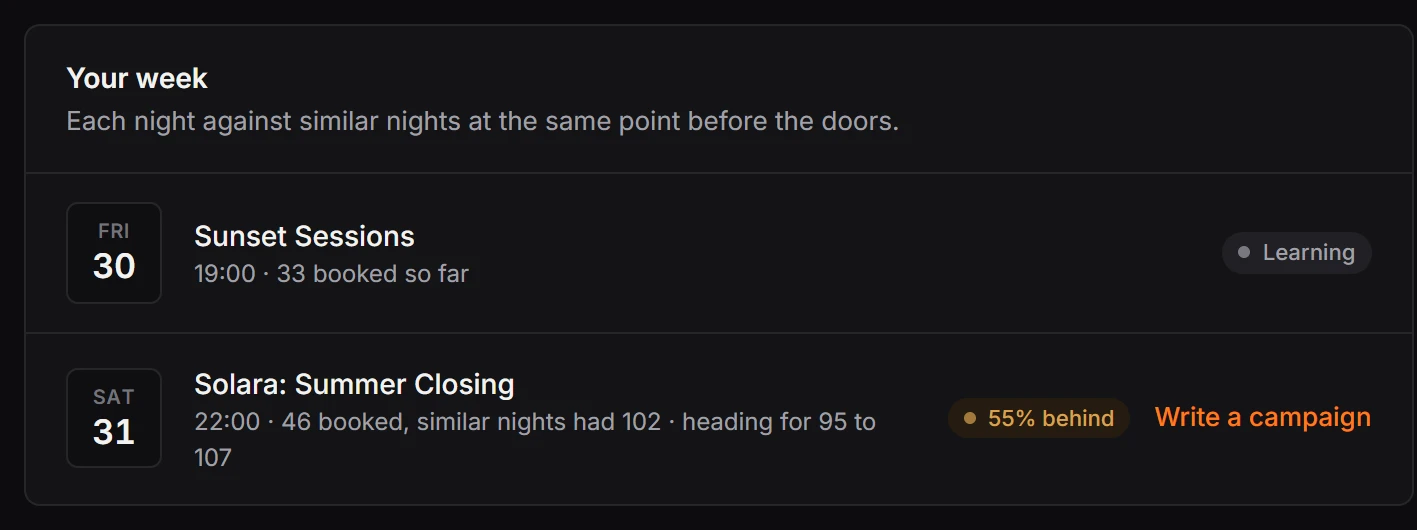
Selling 80 tickets matters differently ten days out and two days out. The forecast compares bookings at the same point before the doors, so the pace line tells you something true: this night is 13% ahead of your usual Saturday, or 51% behind.
It tells you when to push
When a night is behind, the forecast says so and offers a campaign, already pointed at that night. If the night has music genres, it also tells you how many of your customers like that music, with a button to email them. The people who came to nights like this are the ones most likely to come again.
It puts the weather and holidays beside the night
Set your venue's location and region, and each forecast shows the weather for the night, up to nine days ahead, and public holidays near the date, including regional ones. A bank holiday Sunday or a rainy forecast for a terrace night is context you want before you decide what to do.
It helps you staff the night
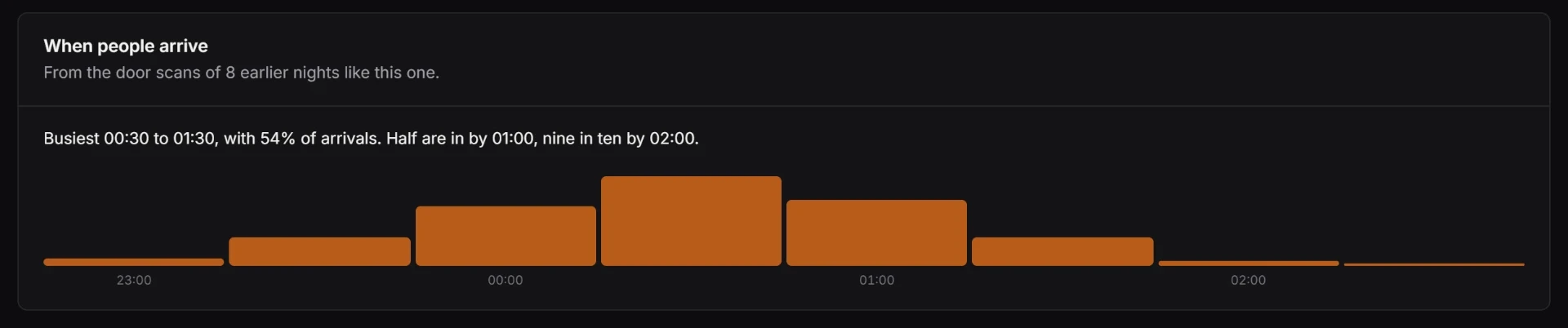
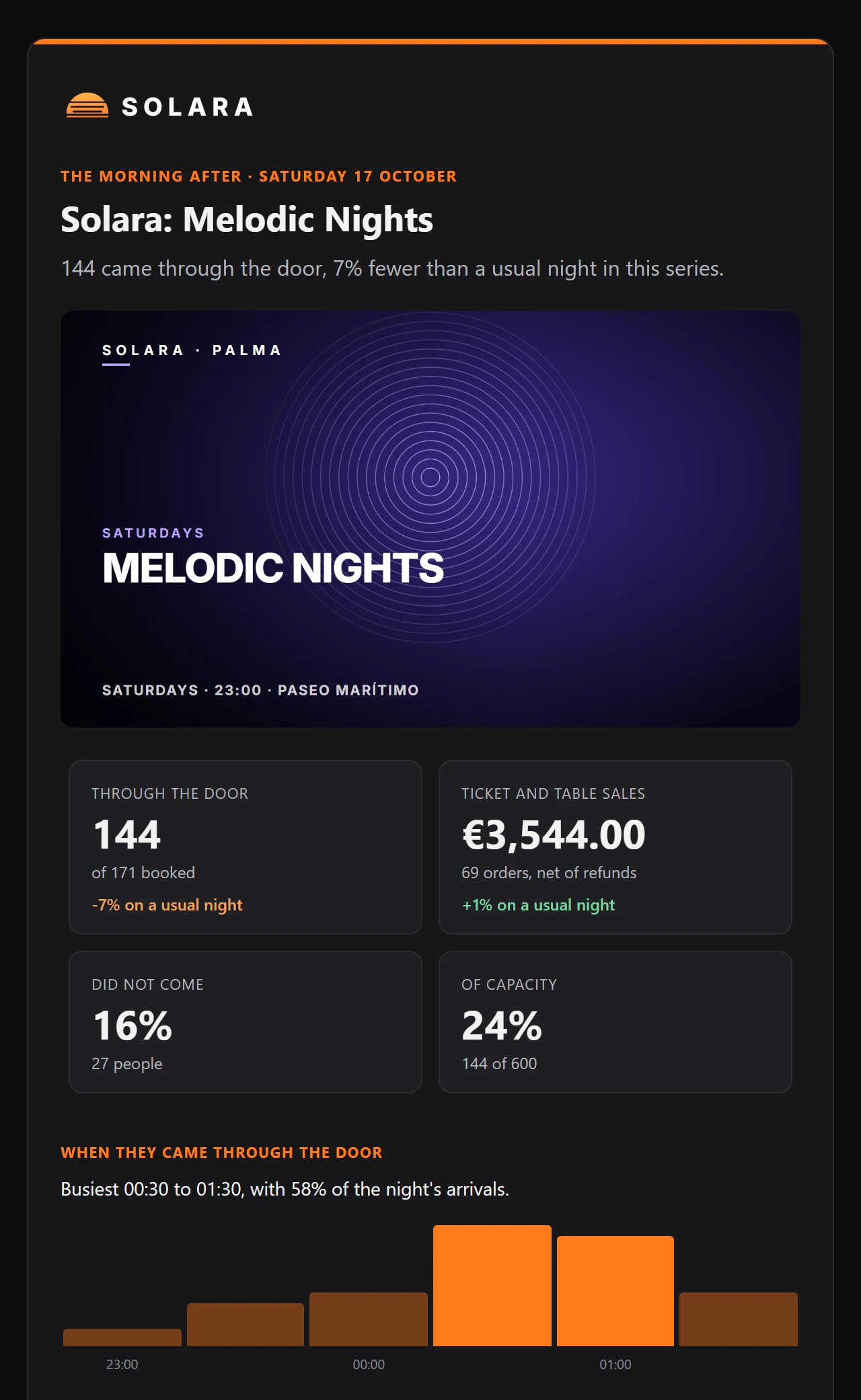
The arrival curve from earlier nights shows the busiest half hour and when most people are in, so door staff, security and the bar can be booked for the real rush. On the night, the live door view takes over, with who is in, who is still to come and the arrivals as they happen.
It closes the loop the morning after
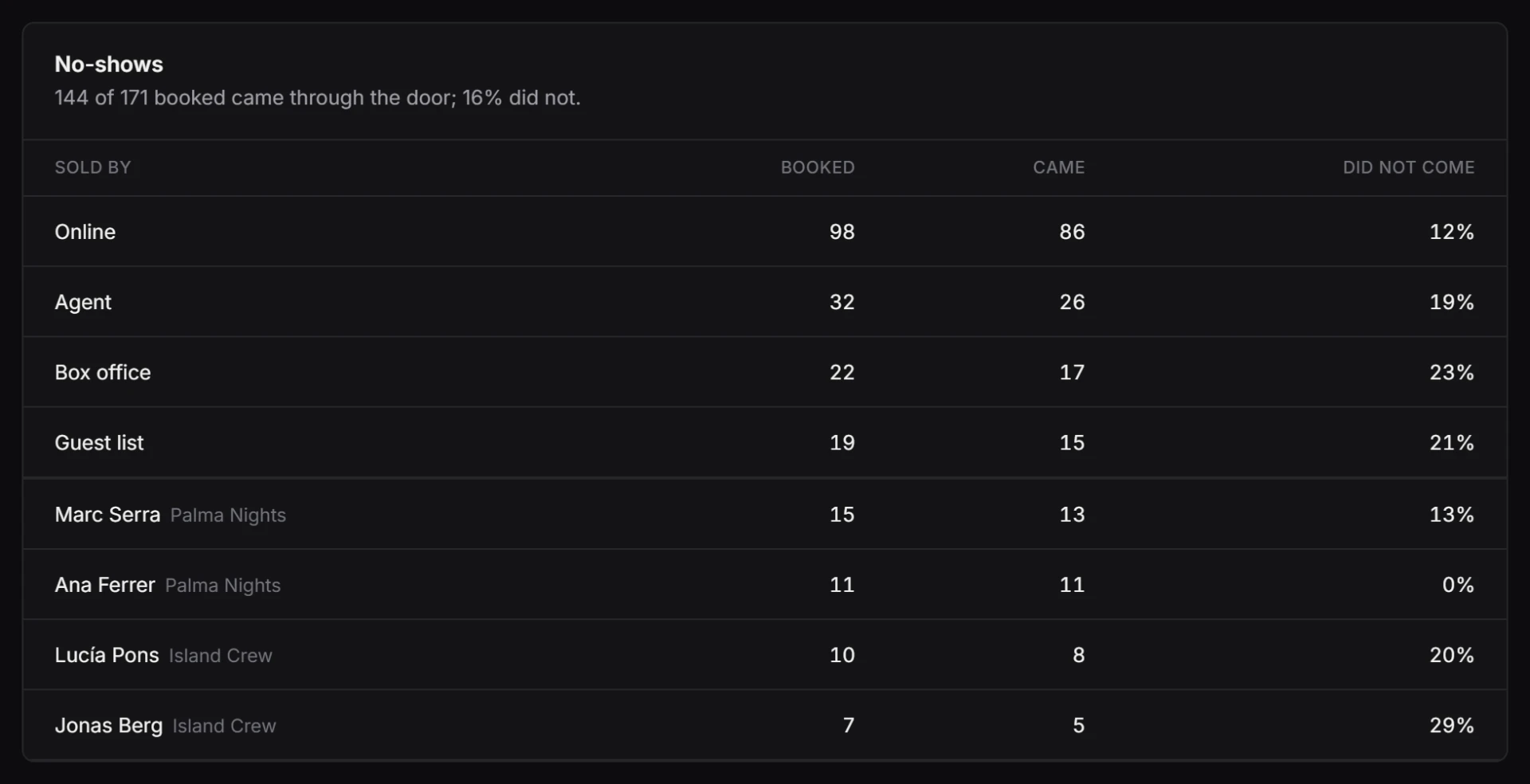
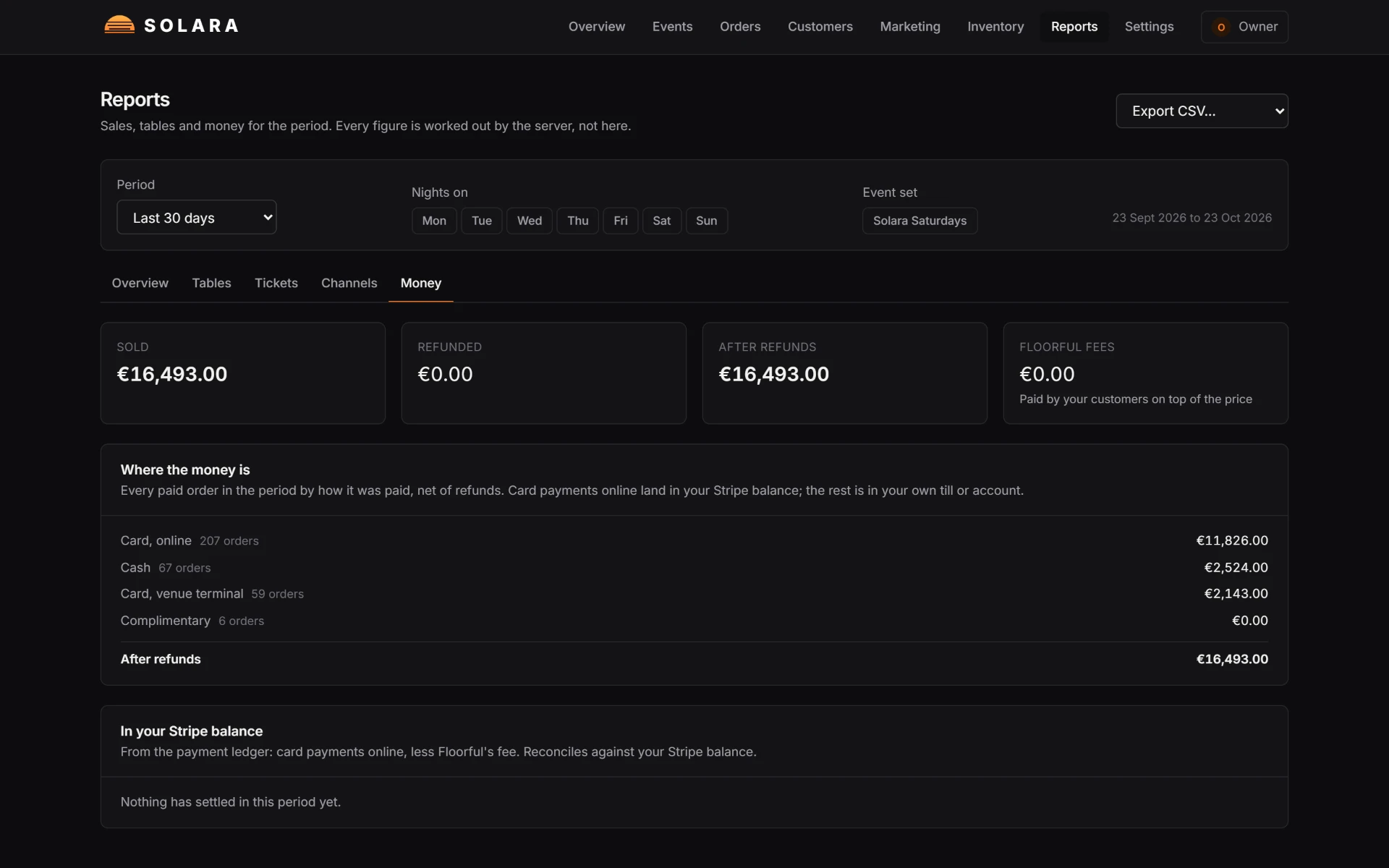
About an hour after the night ends, the morning-after email puts it all in your inbox. Once the night is over, the no-shows by channel and promoter show where bookings did not turn into guests, and each customer's no-shows feed the segments you email. Reports put the night beside the rest of the season. The next forecast starts from all of it.